

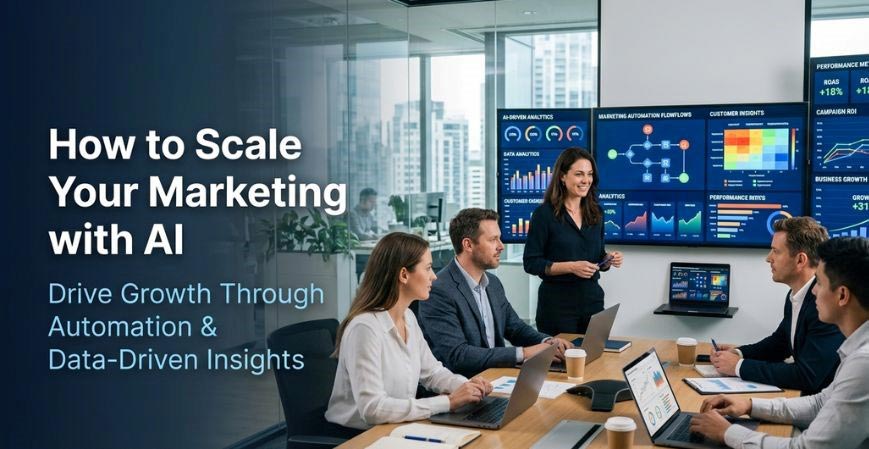
Marketing has been evolving rapidly over the past few years and is now an entirely different beast. Businesses are no longer competing solely based on their products or services; they’re now competing in ways that are often not apparent until you really take a close look at what customers expect from your business. In other words, it’s no longer about how good your product is and/or the price of it, but more about how well you establish relationships with your customers and how much value you provide to them.
One of the biggest challenges for many companies is that they simply cannot scale up their marketing efforts without significantly increasing their costs (e.g., larger teams, more content produced, etc.). Therefore, the best way companies of all sizes can meet the growing demands for effective marketing and continue to grow is through artificial intelligence (AI). The continued growth of the Artificial Intelligence Market is making powerful marketing technologies more accessible, allowing businesses to automate processes, improve decision-making, and scale their marketing efforts more effectively.
Historically, the ability for companies to leverage AI technology for marketing purposes has been limited. However, with the growth of the AI industry, there are numerous advanced marketing applications that have become widely available to businesses today. In other words, companies can implement large-scale AI solutions that will allow them to automatically perform repetitive marketing tasks, analyze the behaviors and preferences of their customers, improve how well they target their audience, etc.
As a result, it is becoming increasingly important for businesses of all types to have an understanding of how to apply AI to support their growth through scaling their marketing activities. It’s no longer optional — it’s imperative that they adopt this technology to remain competitive in today’s rapidly evolving digital marketplace.
The Challenges of Growing Your Marketing
With growth comes greater marketing responsibility. With companies with few customers and one way to reach those customers, it is not uncommon for companies to have thousands of customers and multiple ways to communicate with customers as the company grows. Strategies that work for smaller companies can quickly become outdated and inefficient as demand for products and/or services increases.
Much of traditional marketing relies on time-consuming manual processes to accomplish tasks. Marketing teams must prepare a substantial amount of content, analyze reports daily, manage a multitude of email marketing campaigns, monitor social media, and optimize advertisement campaigns. With so much of their time spent on routine, day-to-day tasks, marketing teams are losing valuable hours that could be used to create strategies for advancing the organization or other business growth initiatives.
As the volume of customer data continues to grow, so does the associated challenge of collecting data from multiple, channels/forms of communication, such as, from every time a customer visits the company’s website, from every customer by reviewing the emails, from every customer interaction on the company’s social media channels, or from every customer order. Although available data has the potential to provide a wealth of insights that could significantly enhance the performance of the company’s marketing function and/or program; the lack of systems to collect, store, and/or analyze that data as available from internal and external sources will create many operational roadblocks/challenges for the organization.
When the appropriate systems are not in place, as organizations grow, the operational challenges that arise from the volume of new business generated can create operational bottlenecks. Often, marketing teams spend more time on process management than they do on innovation. AI, when properly utilized, helps to overcome many of the common operational roadblocks/challenges experienced by growing organizations by automating many of the day-to-day repetitive tasks and converting large quantities of the existing data into actionable insights.
AI Changes The Way Companies Market
AI is transforming the way marketers operate today, allowing them to be quicker, smarter, and more efficient than ever before. Companies that leverage AI in their marketing efforts can now use the power of technology to assist with decision-making, optimize campaigns, and improve customer experience rather than rely entirely on human effort
The ability for AI to process vast amounts of data quickly is one of its most powerful capabilities. While humans can take days or weeks to analyze trends in consumer behavior; AI-based systems can process data and extract patterns from customer data in a matter of minutes. This gives companies the ability to react quickly to changes in consumer behavior and the marketplace.
With AI technologies, marketers have access to real-time, accurate data to assist them in making decisions. By analyzing actual customer behavior patterns, they can determine where to allocate marketing dollars and identify which channels are most effective in reaching potential customers. This leads to a more efficient growth strategy and a reduced risk of wasting money on unsuccessful marketing efforts.
As AI continues to develop and improve, organizations will discover new ways to deliver results and remain efficient. This will ultimately allow businesses to develop an effective, scalable, and flexible marketing strategy.
Improving Customer Understanding Via AI
To be successful in marketing, you need to have a firm grasp of your customers’ preferences. Understanding your customers allows you to develop content that meets the needs of your audience, create experiences that matter to them and establish lasting relationships with them.
AI allows businesses to analyze customer behaviour in a way they may have not previously been able to do, as it can uncover connections and trends that may have been missed otherwise. By analyzing historical information such as customers’ purchase patterns, browsing history, engagement history, etc., AI can provide businesses with valuable insights into their customers’ preferences.
With this enhanced understanding of customer behaviours, businesses can develop targeted marketing strategies and identify segments of customers that will likely be profitable. As a result, marketers can create communication that is specific to the needs and interests of their customers rather than sending mass communications out to everyone.
Understanding customer behaviour at a deeper level also benefits the way businesses make decisions; by identifying and anticipating customer trends, businesses can adjust their marketing programmes well in advance of their competition.
The Role Of AI In Accelerating Content Creation
Content is still a key area of focus for many businesses today as part of modern-day marketing. Businesses, regardless of their industry, will continue to publish blog content, newsletters, social media postings and other forms of on-line material; therefore, it is essential that businesses publish regularly and consistently in order to draw and retain customers.
As businesses grow however, producing high-quality content can be a real challenge. Producing high-quality content takes time, effort, research, creativity and continued effort – all of which many of today’s marketing teams struggle with in today’s marketplaces where growth is at the forefront.
AI-driven content creation systems provide a solution to this issue by assisting with the various stages involved with creating high-quality content including: research, brainstorming, writing/creating and optimizing content. By utilizing these tools businesses are often able to create the resources needed to effectively market their product/service at a significantly reduced rate of production; while also providing consistency in the content that is produced across different channels for the business.
Businesses need to think about AI creating content in order to aid in the productivity of humans creating content as opposed to taking the place of creativity. Although many forms of content are being created currently by marketers today, and will be going forward, the best marketing materials created today will continue to be created by marketers with experience, industry-related knowledge, and an understanding of the brand they represent. AI technologies will help free up time that was spent on routine and repetitive tasks by marketers that they otherwise would have been spending creating positive experiences for their target audience.
Artificial Intelligence Enables Mass Personalization
Today’s customers are accustomed to receiving personalized experiences. As a result, traditional mass-merchandising approaches are losing their effectiveness because customers want messages, recommendations and offers specifically designed for them.
For businesses with a large number of customers, providing this level of personalization manually is very difficult. Artificial intelligence (AI) can make this type of personalization more scalable through the use of data analysis to analyze information about the customer and create the most relevant experience automatically.
For example, AI can recommend products to the customer based on past buying behaviour, customize email messages based on user actions, or display website content that is specific to the interests of the individual visiting the site. These types of personal interactions between businesses and customers create a stronger bond.
As customers receive messages that are relevant to their interests, they will engage more often. This generally results in increased conversion rates, higher levels of loyalty from customers, and improved overall marketing results.
Marketing Automation as a Growth Engine
A significant use of artificial intelligence for marketers is automating their marketing activities. Automating repetitive, time-consuming day-to-day tasks is critical to keeping customers engaged.
Automation powered by artificial intelligence means marketers can do more efficiently. For example, email marketing, lead nurturing, follow-up with customers, campaign scheduling, and audience segmentation can be done automatically based on customer behaviour and rules established prior.
As marketers’ jobs become more automated, they have more time to develop creative strategies and focus on growing their businesses rather than doing manual tasks. Additionally, the likelihood of making a mistake is lessened by an automated process, which ensures that key customer contact occurs when it needs to.
As companies continue to grow in size, automation becomes increasingly necessary for marketers because it allows them to grow their marketing operations without having to hire an equal number of resources.
Increasing Marketing Efficiency Through Predictive Analytics
Predictive analytics is one of the strongest uses of AI and is able to allow businesses to monitor future instead of past outcomes. Predictive systems will provide data to assist organizations in predicting their future outcomes.
With the. usage of historical data and data on customer behaviour, predictive analytics will allow companies to forecast future possible trends and provide insight into opportunities and the likelihood of certain behaviours.
By predicting which customer segments are likely to convert and which products will have more demand, and which campaigns will see the best potential for return on investment, organizations will have data-based information to provide the basis for prior decision making instead of making a decision after an issue occurs.
This information will allow businesses to allocate their resources more efficiently and to increase the overall effectiveness of their marketing efforts. Instead of relying on gut feelings, the company will have the basis for making its business decisions on data related to potential outcomes.
Common Challenges When Implementing AI in Marketing
Although there are many benefits associated with the implementation of artificial intelligence (AI), implementing it well takes time, planning, and careful consideration; most businesses make the mistake of simply adopting AI tools without any deliberately planned approach. AI is most useful when combined with an effective strategy and strong data governance.
One of the biggest challenges of implementing AI in marketing is poor-quality data. In order for AI systems to provide useful insights into their operation (and into making decisions), they must be supplied with good, accurate data to work from. Therefore, if the customer record has missing or outdated information, then the data may very well be inaccurate, resulting in little benefit from using AI systems. Businesses must have a system in place for collecting the data, then making sure it remains accurate and complete.
Another major challenge associated with implementing AI in marketing is over-automating the process of using technology. Although technology can make processes more efficient, too much dependence on it can create a customer experience that seems sterile and impersonal. It is important for businesses to retain some form of human oversight to ensure that they maintain brand voice, creativity, and goodwill with their customers.
Businesses that think of AI as a tool to help them become better, not to replace their current personnel, tend to be more successful in achieving long-term sustainable growth as a result of their investment in AI.
The Future of AI in Marketing
The influence of AI on marketing will continue to grow significantly in the future, as technology develops over time and allows businesses access to greater capabilities in engaging customers, creating content, and optimizing campaigns.
Marketing systems are expected to be much more predictive, personal, and integrated throughout all channels in the future. Therefore, organizations will have the ability to create highly relevant experiences for their customers through monitoring customer behavior in real-time and continuously enhancing performance using machine learning.
Organizations investing in AI-Driven marketing strategies today will create a foundation for long-term success. If they delay the use of AI, competitors using similar technologies will find it increasingly difficult to stay relevant. AI is no longer just a fad or a passing concept, it is quickly becoming an integral part of our modern marketing infrastructure.
Final Thoughts
When you can apply your business knowledge and skill to use AI (artificial intelligence) for scaling your marketing model for business growth, you will be able to take advantage of various opportunities to create new avenues for growth. By providing valuable insights from customer analysis, developing high-quality content, building personalization tools for customers, and automating tasks throughout the procurement cycle, AI technology will help to improve operational efficiency and provide additional effective uses of resources.
Through automation, increased efficiencies, and better decision-making, AI also presents unique advantages to organizations by allowing them to maximize their use of existing resources. In fact, businesses that use a combination of human ingenuity with AI-based technologies will create outstanding customer experiences and increase their performance, which will allow them to be in the best position to achieve long-term, sustainable revenue.
With the explosion of digital companies competing at a rapid rate, businesses will continue to leverage AI as an important mechanism for scaling their marketing activities and/or achieving long-term business outcomes through AI.
Read More: How Artificial Intelligence is Transforming Modern Healthcare Systems

1 Comment
Pingback: How Smart Beginners Approach NSE Without Wasting Their First Month for Better Returns